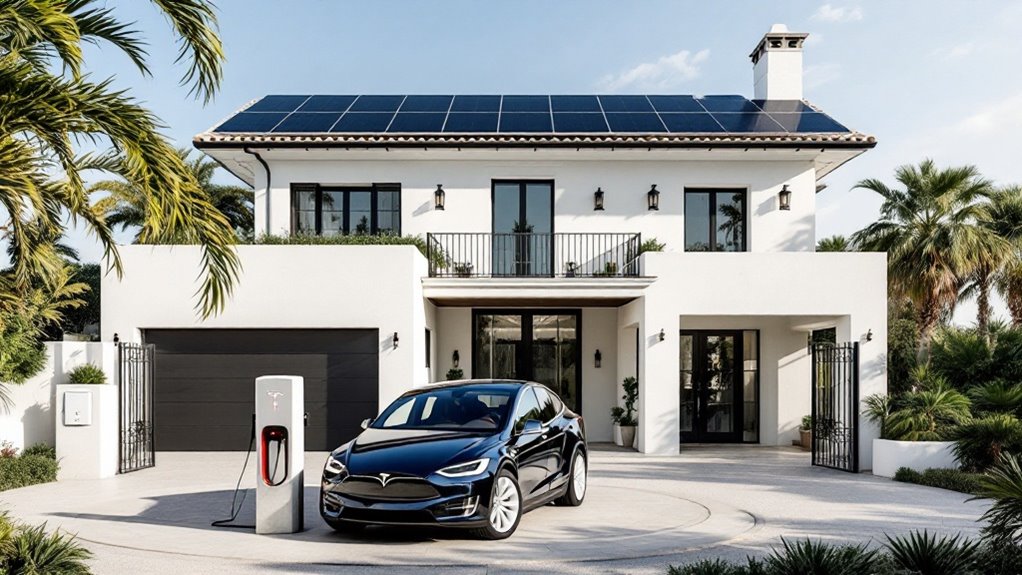
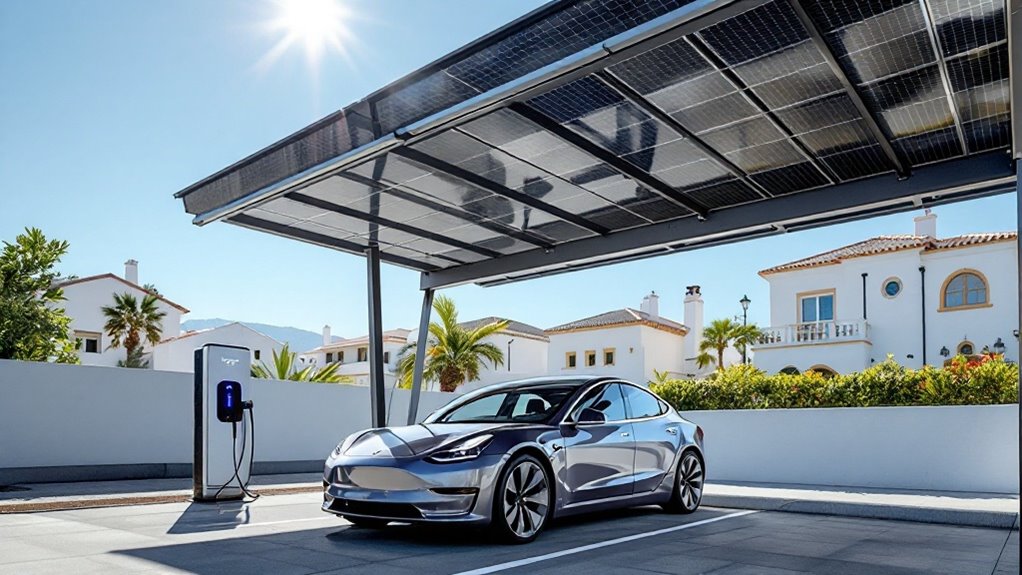
Solar panels can effectively power electric vehicle charging stations by converting sunlight into electricity through photovoltaic cells. The integration of solar panels with EV charging creates a self-sustaining system that reduces reliance on grid power. The infrastructure design requires approximately 5,469 square feet to support a comprehensive charging network.
While the shift to electric vehicles represents a significant step toward sustainable transportation, integrating solar panels for EV charging creates an even more compelling environmental solution. Solar-powered charging systems substantially reduce fossil fuel consumption while promoting a cleaner environment through renewable energy usage. This approach helps offset emissions from both EV production and electricity generation, supporting the global initiative to minimize environmental impact from transportation.
When considering the economic aspects, solar-powered EV charging leads to significant cost savings. It eliminates or greatly reduces electricity costs for charging and decreases reliance on expensive public charging stations. The system's low operational costs, combined with monthly savings exceeding $100 compared to gasoline vehicles, make it an attractive long-term investment for properties.
To implement solar charging at Marbella Villas, space assessment for panel installation is necessary, whether on rooftops or in parking areas. The solar energy system must be sized appropriately to meet both residential and EV charging demands, typically requiring around six solar panels per vehicle to cover monthly consumption. Proper panel positioning at ideal angles maximizes power generation, and existing components, racking, or wiring may need upgrades if integrating with current solar systems.
The practical operation of solar charging infrastructure requires careful consideration. Battery storage systems maintain charging capability during cloudy periods or nighttime, guaranteeing consistent power availability. While charging rates may be influenced by solar generation capacity, Linear Programming approaches enhance energy utilization across shared charging stations. Local vehicle data, parking patterns, and roof configurations inform effective infrastructure planning.
Solar-powered charging stations can operate independently from the grid, providing reliable power for EVs while avoiding costly grid infrastructure installations, particularly beneficial for remote areas of the property. Careful implementation planning creates an efficient and sustainable charging solution that serves both environmental and economic interests while meeting the growing demands of EV owners at Marbella Villas.